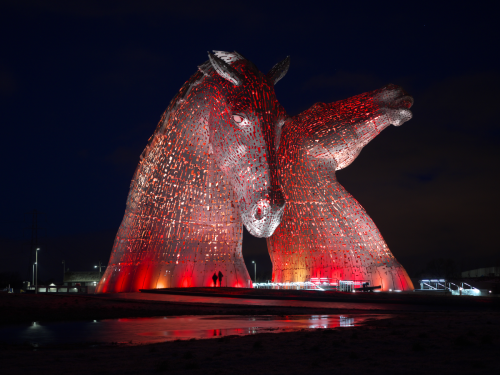
Supernova Kelpies is one of the most distinctive running events in Scotland, combining night-time racing, immersive lighting, and an iconic cultural setting. Held at The Helix Park near Falkirk, the event offers participants the rare opportunity to run in darkness beneath The Kelpies, the towering steel horse-head sculptures that have become a symbol of modern Scotland. The history of Supernova Kelpies reflects wider changes in running culture, particularly the rise of experiential events designed to welcome new audiences into the sport.
What Is Supernova Kelpies?
Supernova Kelpies is a night-time 5K running event that takes place after sunset at The Helix Park. The course follows a closed-loop route around the park and through the landscape surrounding The Kelpies. Rather than focusing on competition or finishing times, the event prioritises atmosphere, accessibility, and visual spectacle.
Participants include runners, joggers, and walkers of all abilities. Many take part in themed outfits or glow accessories, reinforcing the festival-style identity of the event. The combination of a manageable distance and an inspiring setting has made Supernova Kelpies particularly popular with first-time race participants.
The Origins of the Supernova Series
The Supernova series was developed in response to a growing desire for alternative running experiences. As mass participation running expanded, organisers recognised that traditional road races did not appeal to everyone. Many people were interested in the social and emotional benefits of running but felt intimidated by competitive formats or long distances.
Night running emerged as a solution. By hosting races after dark and enhancing them with lighting and music, organisers could create events that felt inclusive, relaxed, and celebratory. The Supernova concept was built around the idea that running could be immersive and enjoyable without being performance-driven.
Choosing The Kelpies as a Venue
The decision to host a Supernova event at The Kelpies was a defining moment in the event’s history. Unveiled in 2013, The Kelpies quickly became one of Scotland’s most recognisable landmarks. Standing 30 metres tall, the sculptures represent the power and heritage of the horse in Scottish industry and mythology.
The Helix Park was designed as a space for community engagement, making it an ideal venue for a mass participation event. Hosting a night-time run at The Kelpies aligned perfectly with the Supernova ethos of combining physical activity with cultural and environmental experiences.
Creating a Night-Time Running Environment
One of the most significant milestones in the history of Supernova Kelpies was the creation of its immersive lighting environment. The route is illuminated with neon lights, colour washes, and projections that transform the park into a glowing landscape. The Kelpies themselves are lit dramatically, creating a focal point that shapes the entire experience.
This visual transformation plays a crucial role in reducing performance anxiety. Darkness, combined with controlled lighting, shifts attention away from pace and competition and toward enjoyment and participation. Music and ambient sound further enhance the sense of occasion.
Accessibility and Inclusion in Modern Running
Supernova Kelpies has become a case study in inclusive event design. The 5K distance is accessible to a wide range of fitness levels, and the non-competitive format encourages participants to move at their own pace. Walkers are welcomed alongside runners, and there is no pressure to achieve a particular time.
This approach has helped introduce many people to organised running for the first time. For participants who may not feel comfortable entering traditional races, Supernova Kelpies offers a supportive and non-judgemental environment.
Participant Demographics and Community Appeal
The event attracts a diverse participant base. Families, social groups, charity teams, and corporate entries are all common. Many runners travel specifically to experience the event, contributing to local tourism and economic activity.
The community atmosphere is reinforced by volunteers, spectators, and local engagement. The Helix Park becomes a shared space for celebration, with the event often serving as a social highlight rather than purely a sporting competition.
Cultural and Tourism Impact
Supernova Kelpies has contributed to the broader cultural profile of The Helix Park and The Kelpies themselves. By integrating sport with public art, the event demonstrates how landmarks can be activated in new and meaningful ways.
The event also supports tourism in the Falkirk area, attracting visitors who may not otherwise travel specifically for a running race. This combination of culture, sport, and travel aligns with broader trends in experiential tourism.
The Evolution of Night Running Events
The success of Supernova Kelpies reflects a wider shift in the running landscape. Night-time events have become increasingly popular as they offer flexibility, novelty, and accessibility. For many participants, running at night feels less pressured and more enjoyable than daytime races.
Supernova Kelpies stands out within this trend due to its iconic setting and strong identity. The event has helped normalise alternative race formats and broaden perceptions of what a running event can be.
The Legacy of Supernova Kelpies
The legacy of Supernova Kelpies lies in its ability to redefine participation. It has shown that running events can prioritise enjoyment, creativity, and inclusivity without sacrificing organisation or impact.
By lowering barriers to entry and offering a memorable experience, the event has played a role in encouraging long-term engagement with physical activity among participants.
Supernova Kelpies Today
Today, Supernova Kelpies remains one of Scotland’s most recognisable and talked-about running events. Its combination of night running, iconic scenery, and inclusive design continues to attract new participants each year.
The event’s history highlights the importance of innovation in keeping running relevant and accessible, ensuring that the sport continues to evolve alongside changing social and cultural expectations.